
Film Assessment Task
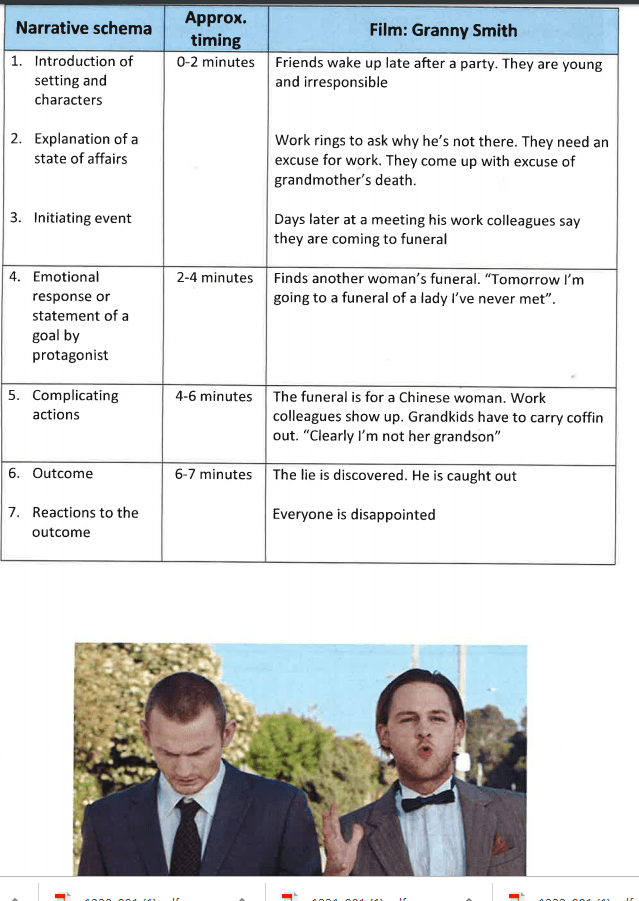
Granny Smith: Film
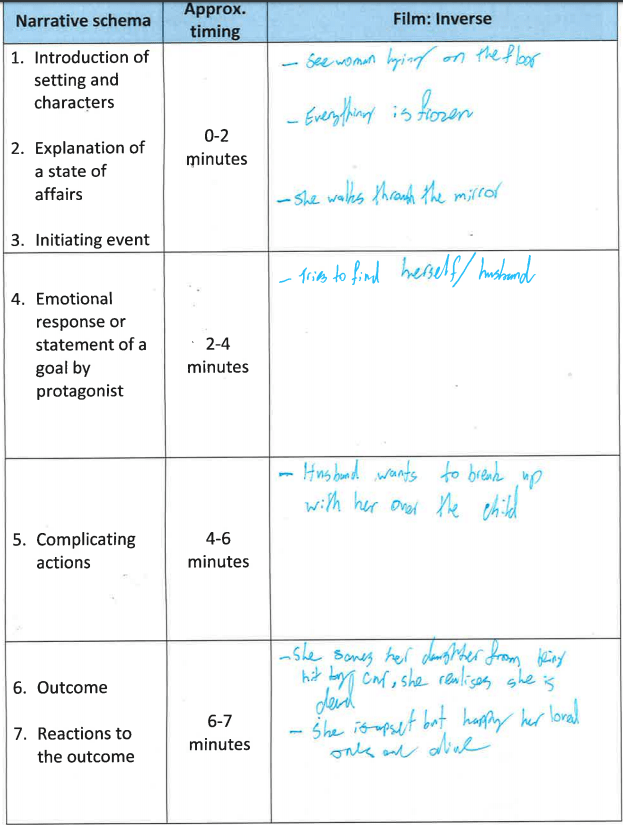
Inverse: Film

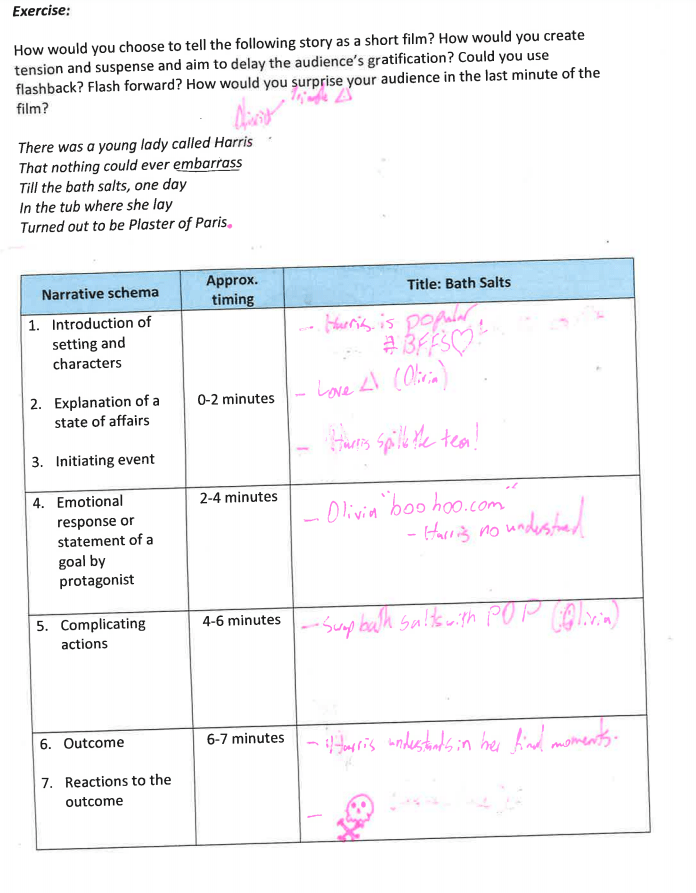
Bath Salts: Limerick

Lemonade Stand
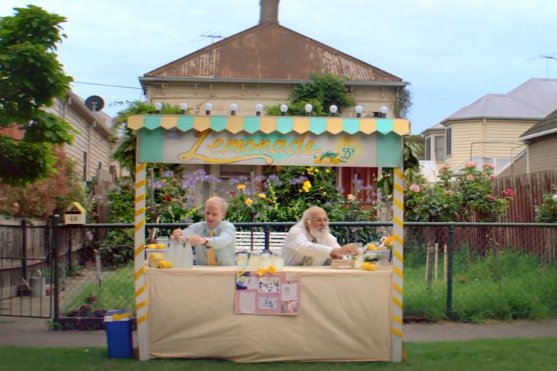
Image of Narrative Schema
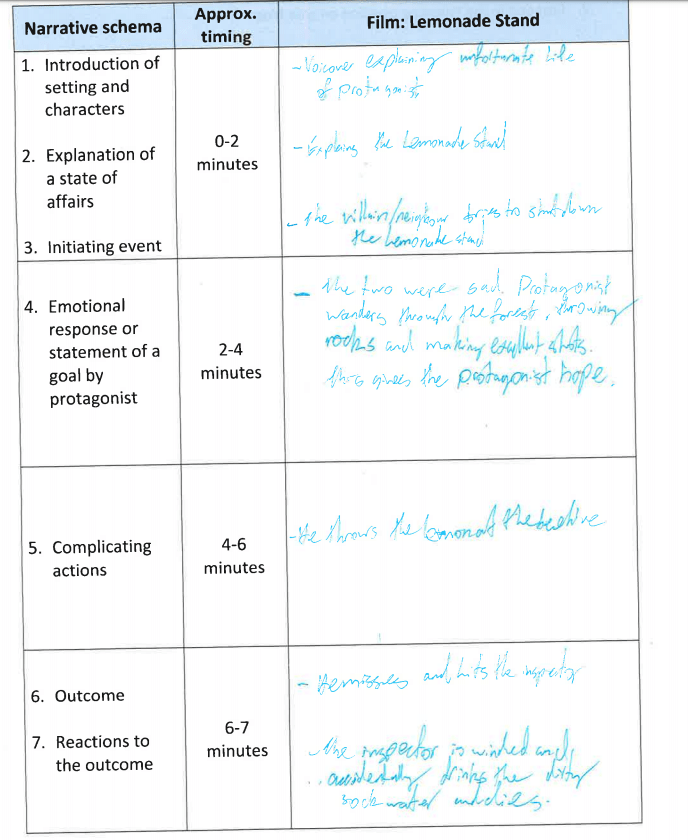
The music in the piece, “Lemonade Stand” is used in a Melodramatic way. In Melodrama, music is used to introduce characters onto the stage and is used when specific events and the emotions of the actors change to keep the audiences’ attention and understanding of the overall mood of the piece. The music in this specific film introduces the characters such as when the “Inspector” comes into the frame, dark and sinister music begins to play to show that he is the antagonist of the film and has a plan to ruin/destroy the protagonist’s Lemonade Stand. This villainous music also appears every time the villain comes in the middle of a scene. On the opposite end, happy/jolly music plays to show that this is the character that the film is based around and he will be our focus point throughout the seven minutes that the Tropfest film runs for. These musical “queues” allow the audience to understand what the scenario is and what we should believe each character to be. The music can also be seen being used to create the feel/mood of the scene. This can especially be seen when sad music plays once the inspector tries to close down the Lemonade Stand. The reason this music is played here is to show that the protagonist is down and has lost a sort of sense to life because he and his grandfather’s Lemonade Stand has been shut down. This down music and the facial expression and gestures such as the protagonist wandering and kicking rocks in the forest give the audience the idea that we should have sympathy for this character and it also tells the audience that the character is sad. This is then dramatically replaced by sharp and loud sounds to create tension when the protagonist has to throw the lemon at the bee hive in order to save his lemonade stand and this is then cut and silence to show humour when he throws the lemon at the inspector, where he is then forced to drink the “lemonade” to bring back some of his consciousness. This then leads to the inspector drinking the dirty sock water and killing him, where triumphant music begins to play to show the audience that the hero has killed the villain and has won the battle.
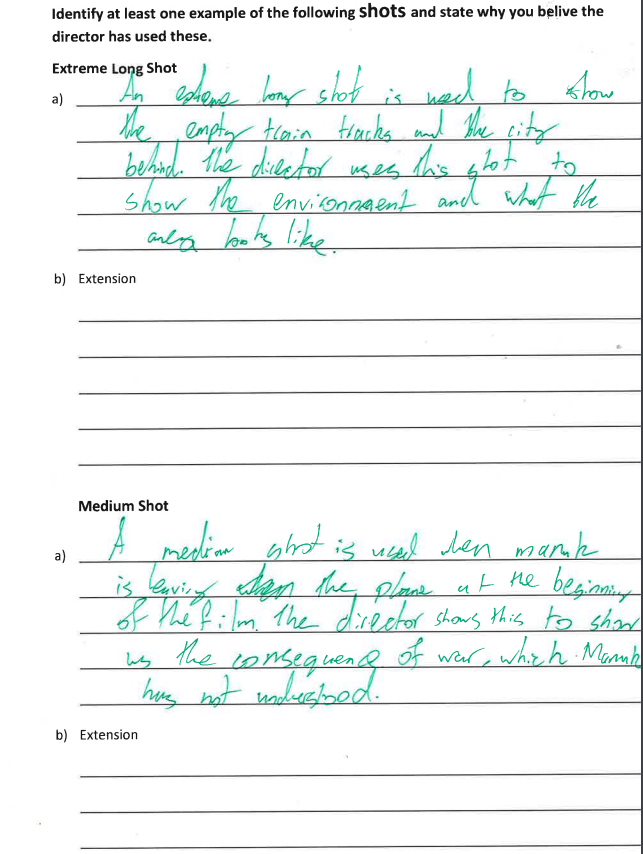
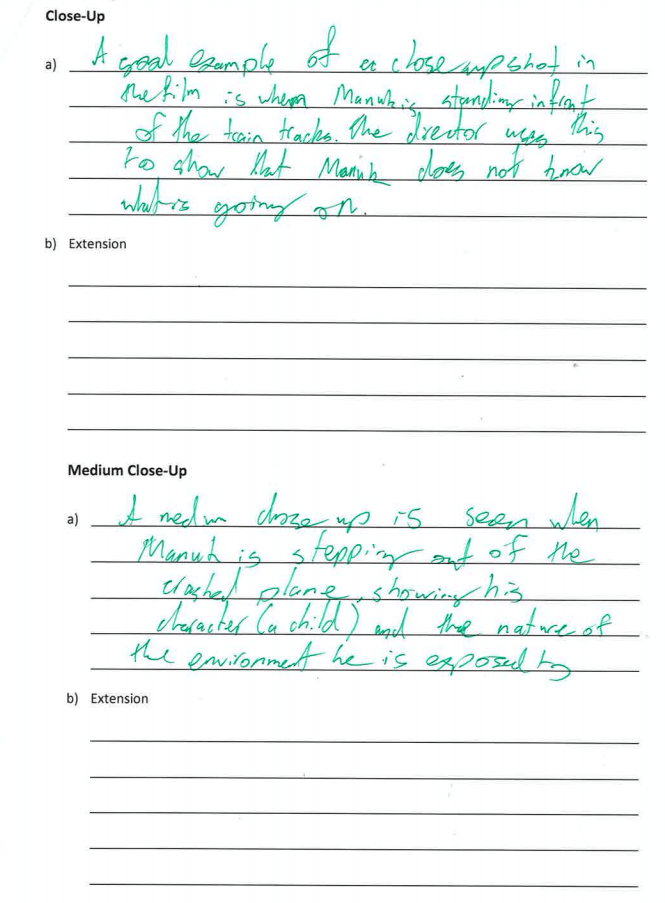
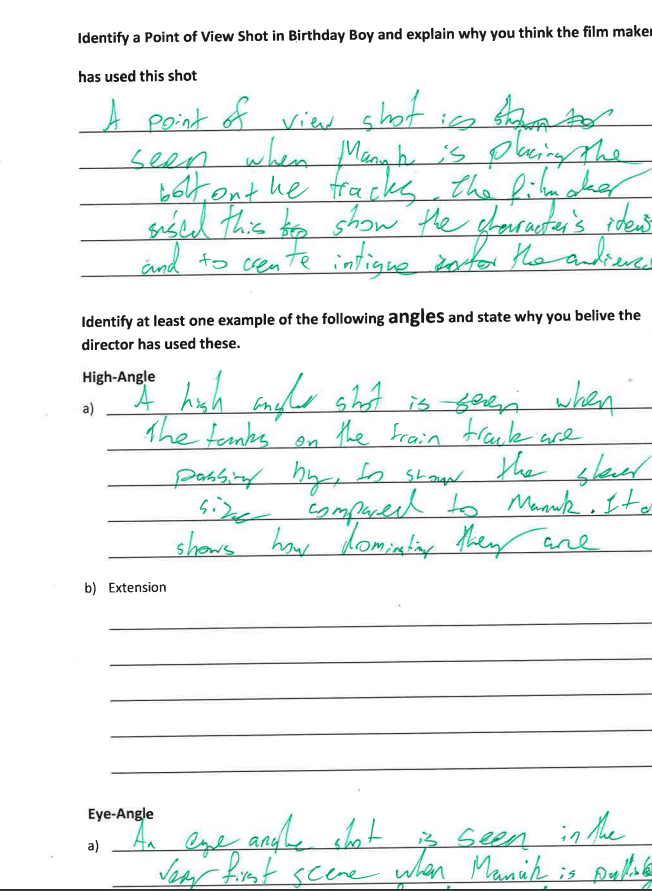
Birthday Boy Task

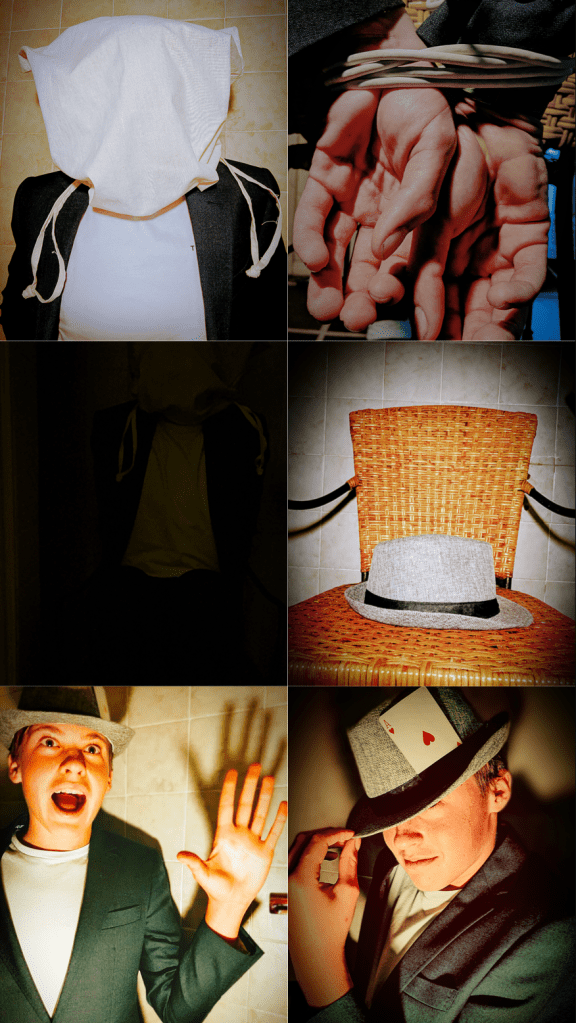
6 Photo Storyboard
We were tasked to create a six image storyboard using the techniques of action and fraction to tell a story. My story is what is seemed to be a high status man that has been kidnapped. The lights go off and he disappears. It turns out that he was a magician and this was all a show. Here are the six images that make up my storyboard:
Steven Spielberg Reflection
Today we looked at Steven Spielberg, an amazing direction that is classified as one of the best across the world. We watched a video that showed one of Spielberg’s most famous techniques in regards to introducing characters, where he would introduce characters by either showing fractions of the character, or showing the character through their actions and personalities.
In the video, it talks about fraction in relation to introducing characters. Fraction is where a character is introduced by defining features such as a shoe or a hat to show their status and their stock type character. For example is the first part of a character that we saw was an expensive diamond necklace, we would assume that this is a high status character with a lot of money.

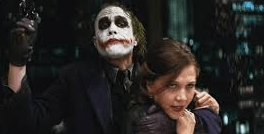
Another method that is shown in this short video was action. Action is where we see the whole character but we assume who they are by how they walk and look. This is a technique called “show don’t tell”. For example a damsel in distress does not say this, she shows who she is in the plot through her actions and how she is physically represented in the film. She can do this by facial expression and her physical gestures.
Brainstorm
In class we were given our groups for our film assessment task. I have been put in a group with Caleb and Tim. We have said that over the weekend we would all brainstorm ideas for our theme for the task (Lost) and collaborate in class to create some really good ideas for our final product. Some of the ideas I have come up with are:
- Lost in love
- Lost in time (Groundhog Day style)
- Lost a loved one
- Lost your life
- Lost in the house (Dementia)
- Lost in your mind (Blank white room )
- Lost on an island
- Lost a game/competition (Bachelor)(Rugby)
Porcelain Unicorn

- The reason that there were many shots in the opening scene of the film was because all of these separate shots assisted the audience to get a clear understanding of what was happening.
- These specific shots give the audience intrigue and a sense of purpose in watching the film.
- Close up shots were used to show the emotion of the protagonist. If we were to have a wide angle shot, this emotional effect would be lost. A P.O.V shot is also used to show the audience what the old man is looking at, whether that be the doorbell, or the window, where we are pushed into a flashback of what happened in 1943. An over the shoulder shot is also used to create the same effect as the P.O.V shot.
- Tracking shots were used to follow the path of the protagonist as he tries to find the address that he has written down on the yellow note. Another tracking shot also follows the box specifically, creating mystery and intrigue, making the audience invested into what they’re watching to find out what is in the box.
- A point of view shot was used in the old man’s perspective to show that he is the protagonist and where he looks is where our eyes should be looking. Point of view shots in the opening sequence of this film also show how he is slowly approaching the house, because he is nervous to go to the door. It then cuts to a point of view shot looking at the doorbell and at the window, showing that he is weary of pressing the doorbell and is reminded of a memory when he looks at the window
- It is important for a director to have good coverage because having this assists in the film and the audiences understanding of that. Having good coverage allows the film maker to possible have excess film and in situations such as making a film, it is better to have more than less.
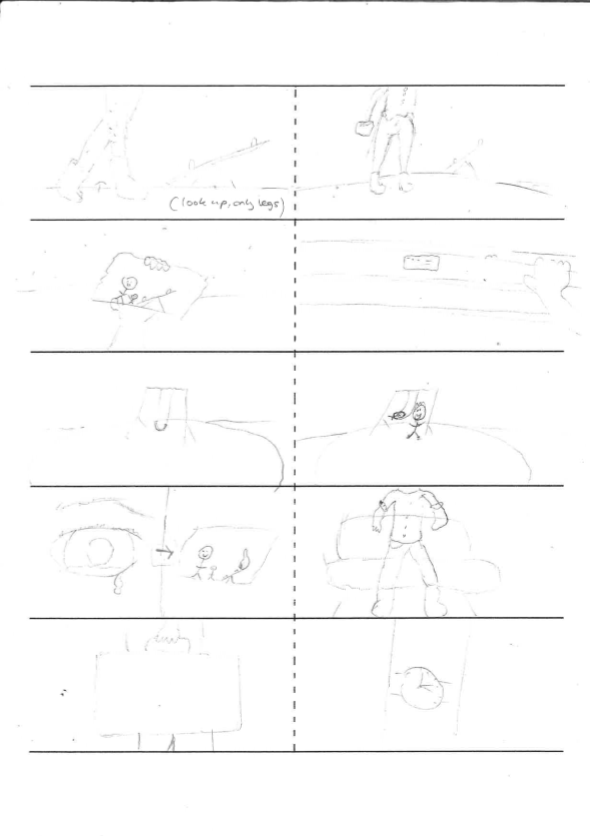
Storyboard For Short Film
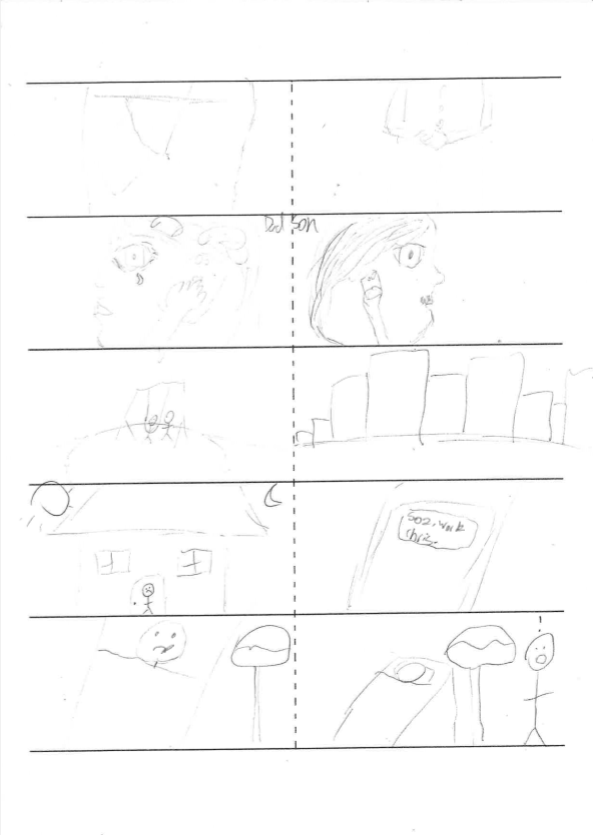
Script
Scene 1
View of park, worm view (camera resting on floor). Father walks past, but only shows the legs).
POV of park
Father sits at a park bench, camera shows fathers back.
Camera view shifts to fathers point of view.
Father (sigh)
_______________________________________
Shows flashback of young son and father playing
Young Son (giggles)
Father Gotcha, haha.
_______________________________________
Camera showing fathers pants, a tear drops on the photo
Father (sobs)
Scene 2
Father gets up from bench, camera showing back. Shows fathers face crying.
City noises start to play, voice over.
Into City. Bus passing, Camera then follows a business man viewing his business bag.
Slowly reveals the man but stops before it shows his face.
Scene 3
Camera still on father’s face from start of Scene 2
Father reaches in his pocket and grabs phone.
Business man reaches for his phone and puts it to his ear, revealing the mans face
Father (voice over) Son… I’ve missed you
Business man Sorry, who’s this? I have a meeting soon, be brief.
Father You don’t remember me?
Son (Man) Oh, hi dad. What are you doing?
Father I want to see you again. Can you come tomorrow? To my house?
Son Yeah (not confident) , hopefully I’ll make it. I have to go now.
The meeting’s about to start.
Phone Call ends
Father When did we go astray?
Father lowers his face, starts to cry.
Scene 4
Show montage of good times with father and son fading into what time is like now.
Scene 5
Son doesn’t show up. Father waits at the front of his house for a long time.
Father (sigh)
(speak to self, rhetorical questioning) Son, is there something more important in your life?
Have you forgotten me?
Father, leaves front of house and enters his house. Quick change to father in room, collapses on his bed. Camera fades out into blackness.
—
Just a view of a phone. Father receives a text from his son, it reads: had work, couldn’t come Chris.
Scene 6
Father wakes up sick. Tissues cover him in bed. Canted Shot
—
Son is walking in the city, then suddenly stops. Removes a photo from his pocket of his father and him swinging on a swing or sitting on a bench at the park. He starts to run.
Or looks through his contacts and sees his dad’s name.
Scene 7
Son bursted through the fathers bedroom door and sees his father lying there sick and ill. The Son stands still, motionless.
Father Son, you came.
Son (panicking now) I’m so sorry, ah! … I’m truly sorry.
Dad, (father falling asleep) dad! what’s wrong.
Can I do something? Tell me, anything, will you be ok.
I… I love you.
Father I know you do… I… I love you too.
Father lets out a loud breathe and “dies”. Camera always on father while the Son is yelling and crying in the background. Can show Son’s arms on father.
THE END
Shot list
| Shot Number | Shot Size | Description |
| 1 | WV starting at a medium distance progressing to a close up | Father walks towards the camera slowly without showing anything but his legs |
| 2 | CU of just waist down focusing on hand | Father stops and lifts a photo – of him and son – to his face. |
| 2a | CU POV | RED shoe in hand – viewed by father |
| 3 | Slightly canted POV shot pointing towards bench as he moves forwards. | Father going towards bench and reaching out a hand to bench backrest. |
| 4 | ECU | Hand on park bench |
| 5 | POV shot focused on swing for symbolism | Implies that father is looking at and thinking about swing |
| 6 | Exact same POV shot but in flashback | Flashback of father and son’s time together |
| 7 | POV from flashback father. | Sees his son in the swing swinging |
| 8 | ECU on father’s eye | He is crying. |
| 9 | CU on Father’s leg | Tear falls onto photo |
| 10 | MS | Father standing up back to cameraVoice over starts |
| 11 | CU and tracking shot | Following a man’s briefcase |
| 12 | CU on watch. | Watch is ticking to symbolise son’s fast paced life |
| 13 | CU of side of with hand reaching down | Side of body with hand reaching towards ringing phone and answering “Hello |
| 14 | Same MS | Father standing up back to camera with phone in hands |
| 15 | CU on face and phone, SonVoice over of father beginning conversation | Father starts phone conversation with “Son…” |
| 16 | Same CU | Son responds with “Sorry who’s…” Then looks at phone |
| 17 | MS of Father | Father speaking, “You don’t remember me?” |
| 18 | MS of Son | Signalling to a colleague he needs a few minutes, Son saying “Oh, hi dad. What do you want?” |
| 19 | MS/CU of Father | Father saying “I want to see you again. Can you come tomorrow? To my house?” |
| 20 | CU on back of son’s head | “Yeah, hopefully I’ll make it. I have to go for now. The meeting’s about to start.” |
| 21 | MS of bench | Father drops phone and says “When did we go astray?”Then lowers his face.Fades into montage |
| 22 | MS of Father with ball | Father passing ball to son in montage |
| 23 | LS of Father waving at son in door of house | Son’s first day at school/important event |
| 24 | ECU of Father’s hand reaching for his son’s | Son reaches out to to hand but turns it into a hug |
| 25 | MS of Father and Son hugging | Son returning from important event (above)-End of Montage |
| 26 | ECU of Father’s foot tapping | Father outside as he waits |
| 27 | POV & CU of watch | |
| 28 | MS of Father | Saying to the sky “Son, is there something more important in your life? Have you forgotten me?” Then pointing his head down |
| 29 | Same MS then zooming out to WV/LS | Reveals that house is the same as in montage-not moving on |
| 30 | CU of Father checking his phone | He has no messages and decides to go inside |
| 31 | MS of Father getting up to go inside | Takes last look before going inside |
| 32 | CU of Father’s hand on door handle | Slightly oblique/canted |
| 33 | POV as Father walks into house to his room | Decently oblique/canted |
| 34 | Tracking Shot on phone | As Father places it down |
| 35 | CU on photo | Photo of father & son |
| 36 | CU on Son’s face | Son realises his mistake, clear on face then starts to run |
| 37 | MS of Father | Hear son saying “Dad” |
| 38 | CU of Son and Father’s faces+hands | “I’m so sorry, ah!I’m truly sorry. “ |
| 39 | BEV of Son over Father | “Dad! what’s wrong. Can I do something? Tell me, anything, will you be ok. I… I love you.” |
| 40 | CU of Son and Father | I know you do, I… love you too. |
Short Film (TO BE MARKED)
 Finn's Drama Blog